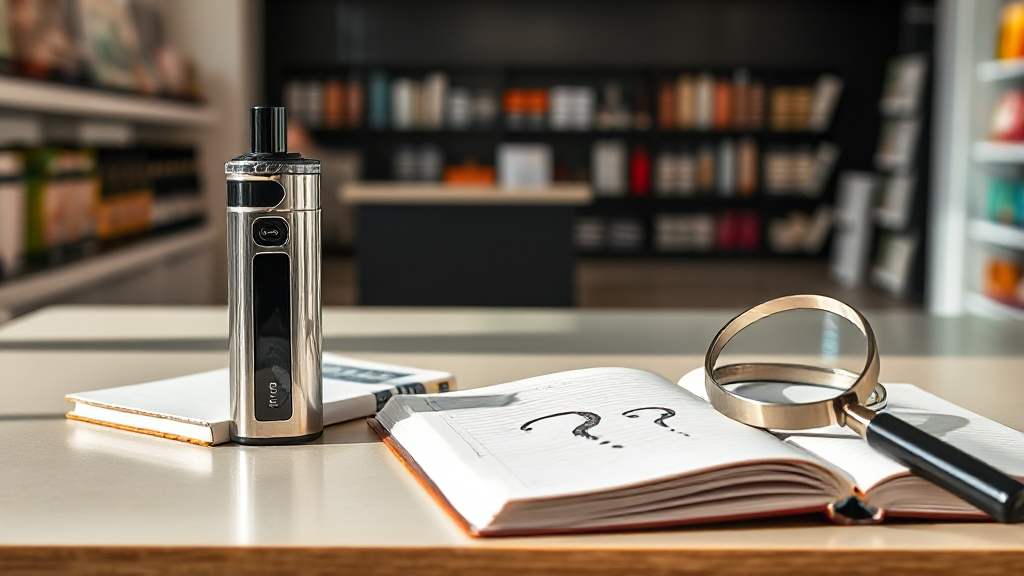
Heated Tobacco Products: Straight Answers to Common Questions
Heated Tobacco Products: Straight Answers to Common Questions
The most common misconception about heated tobacco is that it is the same as vaping. It is not. Vaping heats a liquid, while a Heated tobacco product heats processed tobacco leaf at a lower temperature than a burning cigarette. Because the two are often discussed in the same breath, readers end up with conflicting ideas about what these products are, how they work, and what the rules around them actually say. This article answers the questions people ask most often, grouped into what it is, how it works, safety, and regulation.
What It Is and How It Works
Heat-not-burn products are battery-powered devices that warm a tobacco stick or plug to a temperature high enough to release a nicotine-containing aerosol, but not high enough to set the tobacco alight. There is no flame and no ash, which is why the experience feels different from smoking a cigarette. The tobacco itself is still real tobacco, which matters for both the chemistry and the regulation.
The device side of the category is fairly standard: a charger, a holder, and a stick. The stick is where most of the variation happens. Different brands use different tobacco blends, different filter designs, and different heating elements. Some devices use an internal blade that pierces the stick; newer induction models heat from the outside. That difference is not cosmetic. A stick made for a blade-heating device will not work in an induction device, and vice versa. If you are comparing TEREA sticks and IQOS devices, for example, the compatibility note on the product page is the single most useful piece of information before you order anything.
Because the tobacco is heated rather than burned, the aerosol contains fewer and lower levels of several harmful and potentially harmful constituents than cigarette smoke. That is a statement about chemistry, not a promise about health. Public health bodies generally describe these products as lower-risk than continued smoking for adults who already smoke, while still recommending that non-smokers and former smokers avoid nicotine entirely.
Safety, Misconceptions, and Everyday Use
The question “is it safe?” is really three questions: compared with what, for whom, and over what period? Compared with cigarettes, the available evidence points to substantially lower exposure to combustion-related toxicants. Compared with not using any tobacco or nicotine product at all, there is no benefit. Heated tobacco is a nicotine product, nicotine is addictive, and the long-term health effects of sustained use are still being studied. Anyone with a heart condition, pregnancy, or a history of nicotine dependence should treat that as a medical conversation, not a shopping decision.
Several everyday misconceptions are worth correcting. First, these products do not produce “harmless water vapor.” They produce an aerosol that contains nicotine and other substances. Second, they are not a smoking cessation medicine; they are not approved as a treatment, even though some adults use them as a substitute for cigarettes. Third, the smell is reduced compared with smoke, but it is not absent. Fourth, the device still needs cleaning, charging, and periodic replacement parts, so the running cost is not zero.
There is also a practical side that rarely makes the headlines. Sticks are sold in sealed packs, they have a shelf life, and they should be stored away from heat and moisture. Devices have firmware, batteries that degrade, and heating elements that need occasional attention. People who treat the whole system like a disposable product tend to be disappointed; people who treat it like a small piece of equipment tend to get more consistent results. If you want to browse TEREA products at Puff EU, read the storage and compatibility notes alongside the flavor descriptions, because those details affect how the product performs day to day.
Regulation and Where to Read More
Regulation is where the conversation gets genuinely complicated, because heated tobacco sits between two rulebooks. In many jurisdictions it is treated as a tobacco product, which brings advertising restrictions, health warnings, age verification, and ingredient reporting. In some places it is also treated as a novel or emerging product, which adds separate authorization steps. The result is that the same stick can be legal in one country, restricted in another, and sold under a different flavor name in a third.
In the European Union, the framework is set out through the EU Tobacco Product Regulation, which covers ingredients, labeling, and reporting obligations for tobacco products including heated tobacco. National governments then add their own rules on taxation, flavors, retail display, and where these products may be used. That layered structure explains why online shoppers see different availability by destination and why a delivery estimate is not the same thing as a guarantee of legal sale in your country.
For a neutral, community-edited overview of the category, including device types, chemistry, and market history, the relevant reference page is a reasonable starting point. It is not a medical authority and it is not a retailer, but it does collect the terminology in one place, which makes the rest of the reading easier. Once you understand the vocabulary, product listings become far less confusing.
If you decide to order, keep the sequence simple: confirm your device model, confirm the stick compatibility, confirm your destination, and only then look at flavors. A quick check of View TEREA ordering options at Puff EU shows how product pages present compatibility and shipping information side by side. Take a moment to shop TEREA sticks only after you have matched the product to your device. And if you are still comparing options, it helps to browse TEREA sticks at Puff EU with your device model written down in front of you, so the choice is based on fit rather than on packaging.
Frequently Asked Questions
Is heated tobacco the same as vaping?
No. Vaping heats a liquid that usually contains nicotine, propylene glycol, glycerin, and flavorings. Heated tobacco heats actual processed tobacco leaf. The aerosol chemistry, the device design, and the regulatory treatment are all different, even though both are sometimes grouped together as “alternative nicotine products.”
Does a heated tobacco product produce smoke?
It does not produce smoke in the usual sense, because the tobacco does not combust. It produces an aerosol formed when the heated tobacco releases nicotine and other volatile compounds. That distinction is why there is no ash and why the visible plume is lighter than cigarette smoke, but the aerosol is still not clean air.
Can I use any stick in any device?
No. Sticks are designed for specific device families and heating mechanisms. A stick made for a blade-based device generally will not work in an induction device, and using the wrong combination can damage the device or produce a poor experience. Always check the compatibility information on the product page before buying.
Are heated tobacco products regulated?
Yes. In the EU and many other markets they fall under tobacco product rules covering ingredients, labeling, warnings, and reporting, with additional national rules on flavors, taxation, and public use. Because rules differ by country, check the requirements where you actually live before ordering.